An Instagram friend asked me last week why I don’t post more about disability rights advocacy. He thought I would be a good voice in this space, and maybe someone would want to listen. He was being kind.
I have an answer, and maybe it is not conventional, kind, or even welcome.
In India, your problems get attention when you have one of three things: influence, money, or votes. Look honestly at where disabled people stand on all three.
The Census counted 26.8 million of us in 2011 — about 2.21% of the country. That number is almost certainly too low; apply the prevalence rate the WHO and World Bank use worldwide and the real figure is several times higher, with some estimates crossing 190 million. But take the smaller number.
Even that many people, spread thin across 543 Lok Sabha seats and 4,123 assembly constituencies, add up to nothing a politician has to worry about. We do not cluster anywhere. We do not swing a single seat. In the cold language of electoral maths, our cause is insignificant. Too few, too scattered, to be counted.
Once you see it that way, everything else stops being a mystery.
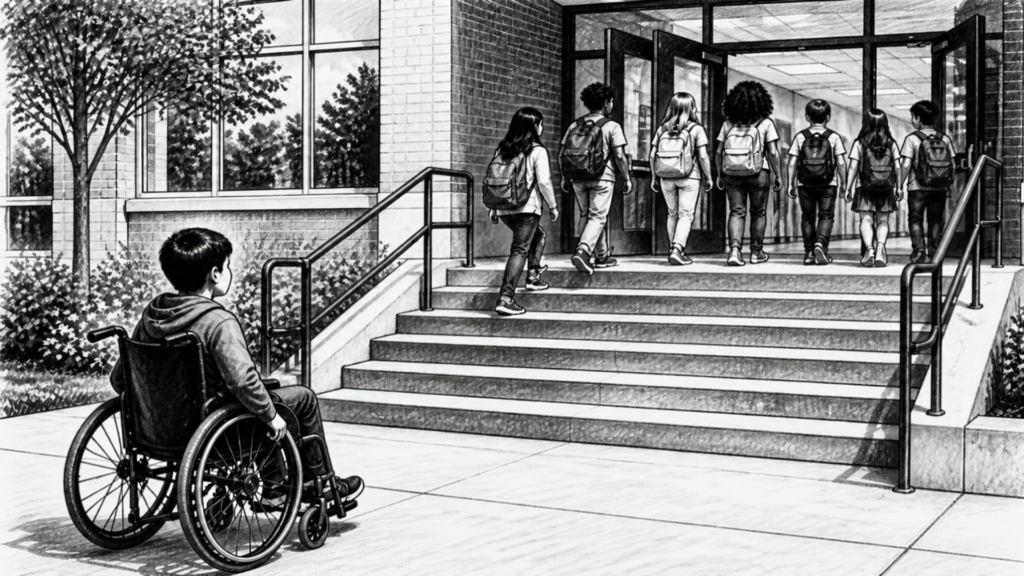
Take the Accessible India Campaign. It launched in 2015 with confident targets: government buildings, transport, and websites made accessible, most of it promised by around 2018. That deadline came and went. The government reset it to March 2020. That one passed too. By 2024 the campaign had quietly been folded into a larger, open-ended scheme with no completion date at all. Nine years, and the finish line didn’t just move, it disappeared.
Ask yourself why a government can let a flagship promise dissolve like that with no consequence. Because missing it cost them exactly nothing. No bloc of angry voters. No headline that lasted a week. Nobody was keeping score, because the people it was for could not make anyone keep score.
Step back from disability for a moment, because the rule underneath this is not really about us at all. It is about leverage, and leverage comes down to a single question: is anything worse when you are not there? If you are not critical in the room, you are replaceable.
Now look at private workplaces, where there are no election maths to hide behind. Disabled people make up less than 1% of the workforce at India’s listed companies. Nearly 38% of surveyed companies employ not one disabled person, permanently, at all — not “few,” zero. Fewer than a quarter of Indian workspaces have even the basic facilities that would let someone like me show up and work.
None of this is hostility. It is a room full of people who never had reason to think about access, because nothing in their own lives ever made them. That matters, because you cannot shame a person into caring about a problem they have never once had to see. And if guilt will not move them, and the law has not, then the question stops being how to make them care. It becomes what would make them unable to afford not to.
What has actually moved people with decision making power, is never appeal. It is the need. The employee whose judgment the room waits for before it decides. The freelancer a client rebuilds a launch date around. The one person whose absence quietly breaks something nobody had noticed they were holding up. That is the only kind of access no one can revoke — because it was never granted in the first place. It was earned.
So the question was never whether any of this is fair. It isn’t. The question is what each of us is willing to become so good at, that leaving us out stops being something anyone can afford.